
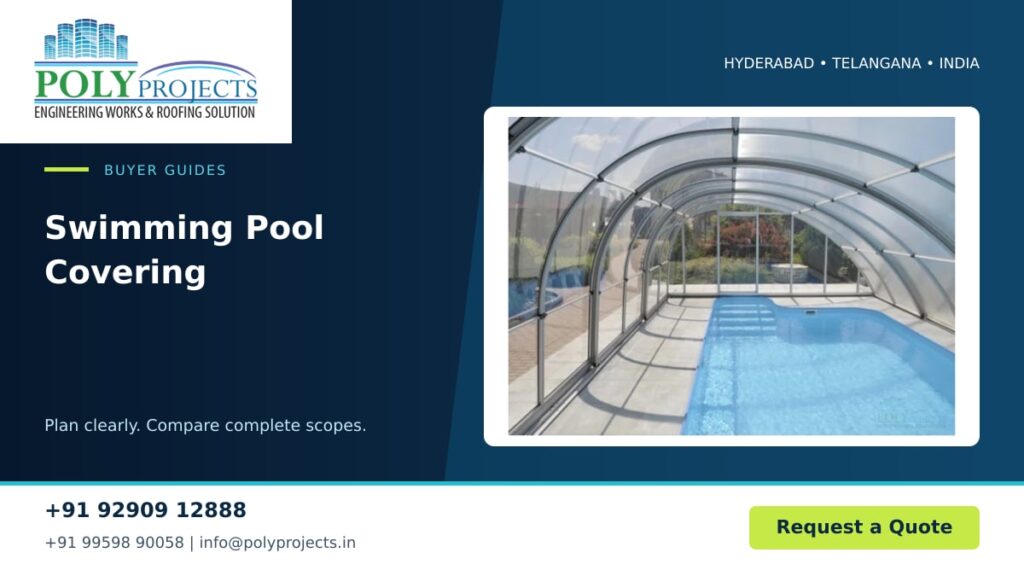
The phrase swimming pool cover can describe very different products. An overhead roof sits above the pool and surrounding area. A separate cover at water level may serve other purposes, depending on its verified design and operation. When discussing a project, define the arrangement first. An overhead roof does not substitute for barriers, supervision or other life-safety measures, and its presence should never be taken as evidence that access to the water is controlled.
Start with the purpose of the overhead roof
Write down the problem you want the structure to address: direct sun, falling debris, some rain exposure or a more usable poolside area. Identify whether the proposed roof covers only the water or also seating and circulation. The roof outline should follow the intended use while giving the design team information to assess supports and interfaces.
Keep safety requirements in a separate, explicit part of the brief. Ask appropriate professionals to review pool access, barriers, supervision arrangements and other applicable requirements. Do not describe a roof sheet, canopy or overhead structure as a safety cover. Any safety product or system needs its own suitability assessment and operating requirements.
Map movement and operations around the pool
Mark entrances, changing areas, equipment access and paths around the water. Add places where staff carry cleaning tools or move equipment. Support positions must be considered against these routes, doors, gates and furniture. Avoid finalising the roof shape before checking how the area will operate beneath it.
Record existing drains and the direction surface water moves. The roof drainage proposal should identify where collected rainwater goes rather than dropping it beside a busy route. Include the people responsible for pool operations; they may know recurring water, access or cleaning problems that are not obvious during a short site visit.
Discuss ventilation and the exposure environment
Explain whether the area is open-sided, partially enclosed or intended to become enclosed. If the proposal changes enclosure, seek appropriate advice about ventilation, humidity and the resulting indoor environment. A roofing contractor should not have to guess operating conditions or assume that an open-pool design remains appropriate after side screens are added.
Tell the supplier about the pool setting and cleaning practices so proposed structural finishes, fixings and roofing accessories can be assessed for that environment. Request product-specific guidance and maintenance requirements. Avoid general durability claims without knowing which components they cover. Coordinate material selection and structural design for the actual site.
Agree maintenance access and handover responsibilities
Ask how the roof, gutters and supports can be inspected without unsafe access over the water. Establish who arranges specialist access equipment and how work will be coordinated with pool closure when necessary. No one should infer that the roof is walkable from its appearance. Consider access before fabrication.
Request a written scope separating roof work from pool plant, electrical work, barriers and other systems. Identify interfaces requiring another contractor. At handover, keep roof information with pool maintenance records while preserving separate safety-system instructions. Future changes to walls, gates or equipment should trigger a review of the affected interfaces.
Use this decision checklist
| Decision | What to record | Why it matters |
|---|---|---|
| Cover type | Overhead roof or separately assessed system | Prevents scope confusion |
| Operations | Access paths and cleaning tasks | Coordinates supports |
| Ventilation | Open or enclosed conditions | Defines the environment |
| Maintenance | Access method and owner | Supports inspection |
Explore our swimming pool covering solutions to identify the right starting point for your enquiry.
Frequently asked questions
Is an overhead pool roof a safety cover?
No. An overhead roof does not control access to water and does not replace appropriate barriers, supervision or other life-safety measures. Assess safety systems separately with appropriate professionals.
Should the roof extend over poolside seating?
That depends on use and site constraints. Mark seating, walking routes and operating areas on the brief so coverage can be discussed clearly.
Can side enclosures be added later without review?
Do not assume so. Enclosure can change ventilation, humidity, exposure and structural conditions. Have the proposed alteration reviewed before proceeding.
Discuss your project with Poly Projects
For a project in Hyderabad or Telangana, call +91 92909 12888 first. Alternatively, call +91 99598 90058 or email info@polyprojects.in. Send location details, photographs and your brief through our quotation enquiry form. Poly Projects provides material supply, measurement, fabrication and installation support; request written confirmation of the scope proposed for your site. You can also send your requirement on WhatsApp.
For related project enquiries, explore Swimming Pool Covering in Hyderabad with Poly Projects.
Discuss your project with Poly Projects, Roofing Contractors in Hyderabad, for roofing material selection and project requirements.